
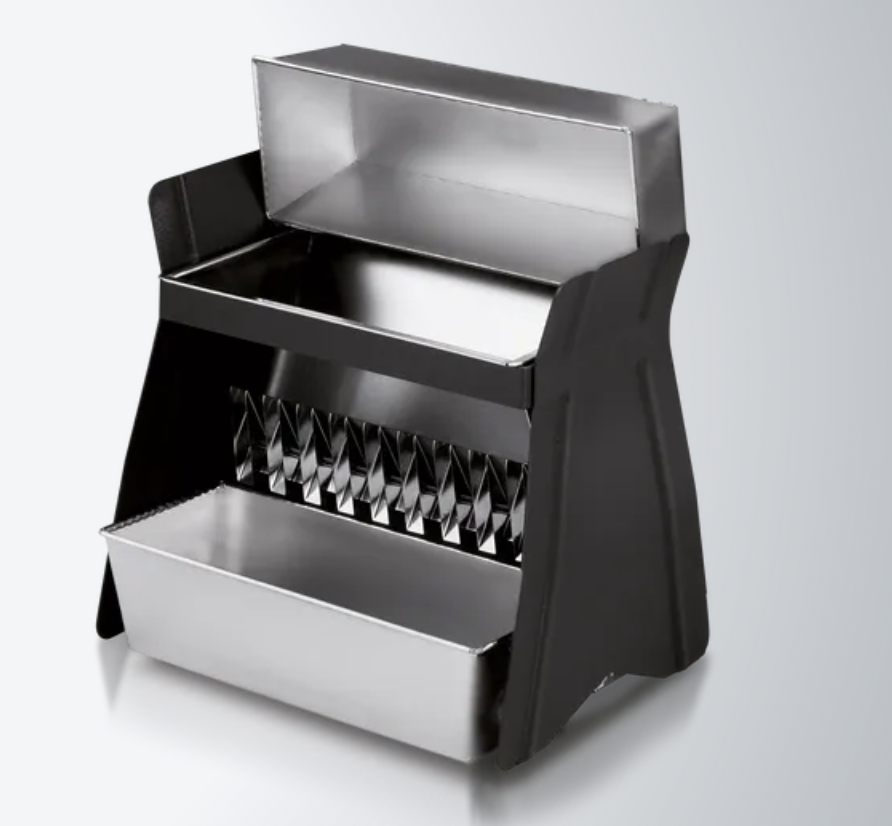
Why Should a Sample Divider Be Used?
Using a sample divider prior to grinding is crucial for the accuracy of laboratory analyses and the representativeness of the sample.
Why Use a Sample Divider Before Grinding?
Samples arriving at the laboratory often exceed the quantity required for analysis. Grinding the entire sample results in both a waste of time and unnecessary energy consumption. However, simply taking a random portion of the sample may not accurately reflect its true characteristics.
A sample divider splits the initial sample homogeneously, yielding a smaller sample that represents the original.
It offers the following advantages, particularly prior to grinding:
• Obtaining a representative sample: The sample's various particle sizes and components are distributed as evenly as possible among the subsamples.
• Reducing the effect of segregation: Heavy and light particles can separate during transport or storage; a sample divider helps mitigate the impact of this separation on analysis results.
• Efficient use of grinder capacity: Only the required amount of sample is ground, avoiding the processing of excess material.
• Achieving reproducible results: It ensures that subsamples taken from the same original sample at different times possess consistent characteristics.
• Reducing grinding time and energy consumption.
• Increasing the reliability of analysis results: Accurate sample preparation is the foundation of accurate results, especially in chemical analysis, particle size analysis, and quality control.
In short:
Accurate analysis begins with accurate sample preparation. By ensuring that the sample fed into the grinder represents the original sample, the sample divider enhances analysis reliability.